-
Designed by Apple and how to re-design our lives
“Designed by Apple” is a great summary of why so many of us like Apple products and technologies but for me, it’s a great summary of my personal journey too, so if you don’t mind I will use it in this context. For the last three years, I have felt that I am struggling with the amount of “improvements” in all areas of my life and arrived at a very emotionally charged November 2013 when my personal happiness simply evaporated. It’s such a terrible thing to admit in public! But here’s some good news: I have spent last six months de-cluttering my life from everything that “might be useful later” and crystallising my new goals and today I am almost at the end of the process. At least I can see clearly all crucial areas of my life and I can start coming back to my old, super-productive and happy self.
I really hope you will never arrive at that deep and dark place I have been to but just in case here is my recipe on the way out:
1. Set up a time frame and inform others about your plan.
Give yourself time! I took six months and agreed with my family and friends on this particular period. I explained my reasons and promised to keep everyone in the loop as much as possible. Surprisingly all my close friends were very supportive and are here for me all the time during this process, actually asking me to take more time to regain my balance and happiness – I love them all for it!
2. Switch everything off!
Mute out EVERYTHING. Stop all your social commitments – you are probably feeling that you are not delivering anyway. Cut down on work if you can and feel that it does not make you happy. Put away your “to-read” books. Switch off TV, radio, even music. Stop. Stop for a while. Find something brainless to do. In my case meditation and yoga were the key. I spent two months working on all major jobs, but the rest of my time was spent in the garden, on the yoga mat, in my specially designed meditation corner.
3. Take it easy and only then attack the more complex problems!
If you feel lost or cannot identify the source of your crisis first try to focus on easy solutions. I personally felt that my problem is rooted deeply in the way I relate to work, family and all relationships – which is a highly complex area of life. So I decided to work on my fitness, relaxation and physical surroundings first trying to work out what FEELS good, what makes me HAPPY. The moment you try to tackle the most complex issues you risk getting lost in your own assumptions so it’s much easier to start small and gradually move to more intense challenges. It took me two months of NOT THINKING about my crisis to be able to see through it with a bit of distance and common sense.
4. Take yourself and your closest friends seriously!
Do not ignore the role others play in your own happiness and your input in their daily lives. As much as you wish to step back, ignore everything and find time for yourself do not forget to let others know just how important they are for you. That’s all you need to do – tell them! You do not have to commit to a weekend of partying (which as stated above would probably work against your goals of relaxation and self-discovery) but there is always time for a SMS, email or a kind sentence on the go.
5. Stay relaxed but disciplined and focused!
Keep to your original timeline and do keep your eyes focused on your goals. If you are aiming to identify and resolve your crisis or re-define the way you live, study, work do all that’s in your power to complete your planned process. In my case, I had to move from meditation to active conversations with friends, notes and thinking. It’s shocking just how we tend to forget to think carefully about the way we live or the way we define our priorities.
6. Exercise!
Write a journal. Make lists of your goals, dreams, priorities. Are you able to define a top ten most important things in your life? If so, write them down and think carefully about their order. Are you sure? If you are doing this exercise in the right, serious manner you will see that you might need to rearrange priorities. I was always convinced that my top priority is independence and freedom of speech just to discover that something that was not on the list (due to the strange feeling of obviousness) was family. To discover a crucial item missing off the list was quite a painful realisation to me, so I expect you might have difficult moments too. But remember, it’s all for good.
7. Trust yourself in finding the right balance!
You venture on a steep hill and often you might feel that you are also stepping into quite new areas of life. That’s all right. Just trust your instincts, experiment and measure just how far you want to change the way you live your life.
8. Share your discoveries with others!
Communication is the key. Always. After a few months of serious work, thinking, re-discovering your life and re-arranging priorities inside of your head and on paper, you might feel that your friends are not even aware of the huge shift inside of you. It’s natural to feel this way and if I may I would wait for the right moment to share it with your friends. We are responsible for each other – each and every change inside of you will initiate change in others, might cause a new sense of uneasy or lack of balance. I had to tread really carefully and explain small changes to all my friends and family each time a decision or discovery was made but also clarified and articulated.
9. Do not think you are done, ever!
After six months of taking active ownership of your l, fe you will feel that you have walked miles and aged centuries. You will feel fresh, ready to face new challenges with clear head and so on. But keep in mind that life is an ongoing path so memorise your priorities, exercise clear thinking and give good example of open, well timed communication. Do not assume your work here is done. The work has just started.
Now you can start designing your life.
Small note: please do not think that after half a year of serious work on my personal development I have suddenly become a successful life coach or philosopher. Quite the opposite – I am purely sharing my personal take on crisis situations and personal unhappiness. If you have your own take, do let me know! I would love to see how you respond to similar stages in life.
-
#RegentTweet
RegentTweet is a very good example of well planned and executed blogger engagement on a pretty large scale. I am really looking forward to all experiences, meetups and a day of well, let’s face it…enjoying Regent Street. Last year my approach was focussed more on the way the event is organised and on catching up with fellow bloggers. This year the networking element is equally crucial but I will also focus on testing all my photo gear (so glad it all arrived on time). I also plan a small private coffee tour with #RegentTweet venues and possibly with additional other stops in the area. So it looks like all my newly updated three blogs will be busy;) Tomorrow will be a nice, relaxing, rather girly Saturday.
-
Anne Leibovitz on photography

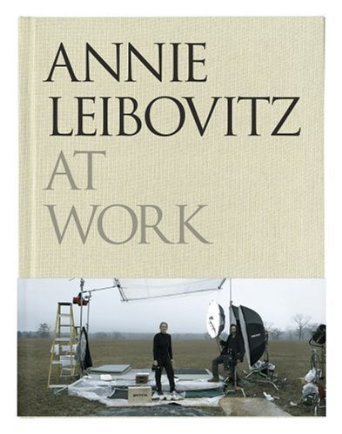
I have just read “Anne Leibovitz at Work”. I think I can relate to her relationship to photography:
“Yeas before it ever occurred to me that one could have life as a photographer, I had become accustomed to looking at the world through a frame.” (then she talks about travelling int he car with her family which resembled my childhood a lot!).
Anne’s book is personal, very honest and inspiring more by examples then empty words, but there is another note made me stop and re-think my own work:
“[when you are on the road] Things happen in front of you. That’s perhaps the most wonderful and mysterious aspect of photography. It seemed like you just had to decide when and where to aim your camera. The process was linear and it never stopped.”
I really wish I could get to the point when my technique allows me to feel this way, freely.
The book finishes with a great summary, something I am taking with me as a keepsake but I would like to share with you too:
“When I’m asked about my work, I try to explain that there is no mystery involved. It is work. But things happen all the time that are unexpected, uncontrolled, unexplainable, even magical. The work prepares you for that moment. Suddenly the cloud roll in and the soft light you longed for appears.”
-
Your feedback from Oxford Artweeks
As I am archiving my Artweeks exhibition I would like to share few notes left in my silver notebook (my guestbook):
“Really Interesting views, from a different perspective of Wantage. Keep going!”
“Thank you for your secret garden to little treasures”
“We enjoyed exploring the art int he garden”
“You’ve made magic out of sleepy Wantage and made me look at familiar things quite differently. Thank you, Sylvia!”
I am glad that the underlying message of my Artweeks exhibition in our garden became apparent to my guests. Just for that it was worth it;) Thank you for visiting, for your time and feedback!
-
Learning from the best
I have spent last week on holidays in my own garden. Actually, I was learning basics and tricks of traditional photography from Wojtek Korsak Polish photographer who had the privilege of working and later exhibiting in amazing locations all around the world. Last week marks an important phase in my work with photography, so I hope that you will see more interesting and exciting works from me shortly.
You can see some of Wojtek’s works here.
-
The Guardian Voluntary Q&A
On Wednesday I had the privilege to join the Guardian Voluntary discussion about sharing of best practices in nonprofit sector in the UK. You can read the entire discussion here but in this post I would like to sum up few points purely for individuals working for nonprofits (something I am currently working on as I am writing my first book). In order to learn and achieve best practices in digital fundraising, marketing and other areas of social good I suggest the following:
1. Read, read, read!
Listen to conversations on-line and off-line. Read industry press. Read conversations on Twitter, Facebook, LinkedIn – but do not limit yourself just to the leading social channels. Follow at least few industry leaders in all spaces – even if today it will be rather annoying Vine;) Read industry blogs (I suggest Netvibes.com if you were a fan of Google Reader). Subscribe to lists. Create your own Paper.li newspaper on the topic.
2. Research before planning!
There are quire a few platforms featuring great case studies, industry updates and best practices but think outside of the box. If you are planning a Twitter based campaign you will probably follow few charities there, but might want to check out UKFundraising and Osocio for good examples and Mashable for newest developments of this particular platform.
3. Study!
KnowHow Nonprofit Study Zone is a brilliant start and with names of tutors from their programmes you will be able to find other relevant courses. Look out for free webinars too – most of the leading social media platforms and tools will offer those on a regular basis.
4. Test your ideas on friends!
To move completely outside of your current comfort zone ask your closes friends to review your idea and ask yourself: if I was to see it on-line would I get involved and if so, how?
5. Share and collaborate!
I know that each sector, each entity has its own competitors but online it is simply polite to share. Read “Trust Agents” if you are still not convinced and adopt the formula of giving more than your own asks.
I hope this is useful and thank you to the Guardian Voluntary for inviting me!
-
Why do you work for a nonprofit?
Back in April Alex asked me to respond to his post. I am sorry it took so long – here it is though. Why did I get involved in charity? Well, I guess to sum up I always felt that I want to help people. I cannot say just how far back it dates – I was raised in a Catholic family, I was an active member of Polish Scouting and I was surrounded by charitable people (which just for the record is not as popular in my homeland as it is in the UK). I think there is a more personal reason though – I had someone really really close in my childhood often terrorising me with the statement that “I have no heart!” – as cruel as it sounds this particular person has shaped my almost rebellious attitude towards ignorance and indifference. I think in early years of my life I always wanted to prove them wrong but with time my charitable activities shaped a habit, I good habit I hope. Occasionally I would take it to extreme, sometimes I would focus more on my marketing/business related work. When I moved to the UK my life has tested me again and I have landed in a situation in which I myself required a lot of support so since then I think another reason for me to get involved is that underlying feeling that I owe something to this world. But maybe I just see it this way and my perspective is again driven more by habit? At the end of the day if you hear from someone that true, deep, honest “thank you” you probably forger about your reasons and focus on repeating it all over again. I dare to think that volunteering, work for a charity or other ways of helping others can be addictive too. In a good way.
Alex, I hope this answers your question but I am happy to discuss in more detail.
-
Exhibitions: Oxford Artweeks 2013
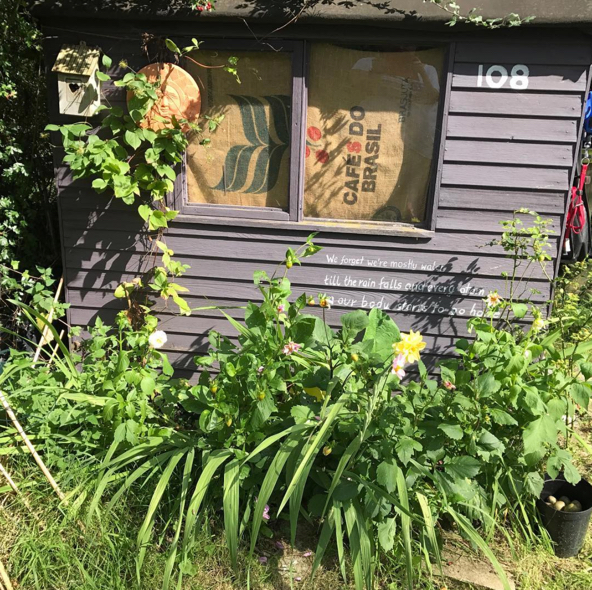
…is now on! Come on and enjoy my works in our amazing garden!
-
Join Twestival.com!
As some of you might know Twestival is back but this time, in 2013 you can register and organise your event any time – not just on one day. I have so far organised all Oxford Twestivals but this year I will be spending more time on the global community team so you can chat to me on @twestival too. In the meantime watch this one and pass it on to all relevant friends – it’s a great initiative. Happy to be even more involved this year!
-
Artweeks Teaser Exhibition in Ardington
Oxford Artweeks South (our part of Oxfordshire) open this Saturday. In the meantime if you want to gain insight into all our works in one place visit Ardington School of Crafts (School Road, Ardington, Oxfordshire, OX12 8PN, Tel: 01235 833433). Our works are up till the 19th of May! Enjoy!